Why Ethics Always Comes Last
Ethics always comes last. Especially when it comes to AI, ethics feels like a nuisance because it slows down the hunger for efficiency. So it ends up at the bottom of the list, after everything else has been checked off.
The way I see it: where ethics sits in a plan like this is no accident. It gets decided, even if nobody says so. Or it was forgotten and only noticed afterwards. In a way it is also a decision to just put something forgotten at the end of the list. Whoever sets the order and pushes ethics to the back is saying how important ethics really is to them.
At the beginning the excitement is huge about what AI can do and why it needs to be implemented now. There is discussion about the application, about the necessary tools and ideally the whole thing gets called Agentic AI and every department gets to marvel. Everyone looks at what others have achieved, and they’re all convinced the future is going to be magnificent. And then at the very end: ethics as a cautionary note that strict attention must be paid. Once more from the top: first the requirements, then the software development, tool implementation, initial tests, processes are rehearsed and then comes the conscience.
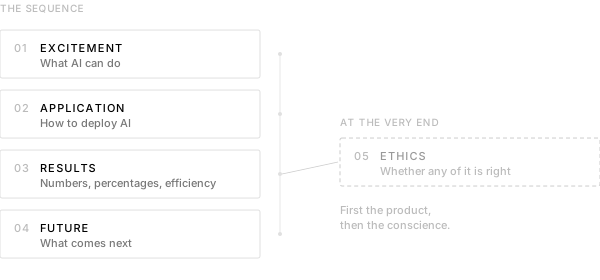
I am not talking about theory. I have seen these processes myself. Wherever I was involved, ethics never stood at the beginning of the discussion. Just like in pharmaceutical development it is first about the effect and then about the side effects. Financial products first paint the returns in the most lavish colors and then comes a risk disclaimer. This sequence is functional and established. Because whoever is excited right away won’t check too closely.
An AI strategy that started with ethics would raise different questions. What about the people whose work the machine takes over? Whose data is it? And what happens when decisions ride on that data and hit the same people directly? And who is liable when something goes wrong in the end? Questions on top of questions, with no established authority that can give real answers. This carries a weight for society that neither politics nor any other institution takes seriously.
That would require a different strategy, one that naturally slows many things down and would be considerably slower and more expensive to implement. It destroys an entire project euphoria when you don’t start with a rosy promise but with a complicated question about a problem nobody wants. But it would be an honest beginning.
The position of a topic in a document often defines its weight. What comes first is important by default and then frames everything that follows. What comes last is usually not even read anymore. Opinions are already formed and decisions already made. Ethics is never the main course but at best a decorative side dish that arrives cold on the plate.
The ethics sections usually read quite nicely and they do name the right topics. Wrapped in well-chosen formulations they present the subject seriously and in a way that is perfectly comprehensible for everyone. At least on the textual level.
But the argument contradicts the text. If ethics doesn’t open the door at the entrance, it has no real message left beyond the idea that it’s enough to think about the consequences at the end.
And that is exactly how it plays out in many companies. AI gets introduced, processes restructured, and based on the results it is optimized further and further. At some point, usually after something has gone wrong or a penalty from some higher court is looming, the paragraph on the ethics question gets read. I have also seen it added after the fact to appease courts. I have been told that happens quite frequently. And then committees are formed and guidelines written. All after the fact and with great seriousness. But only after the reality has long been established.
Many AI discussions reproduce this sequence instead of questioning it. One could show that ethics does not belong at the end because it is difficult but at the beginning because it is important. But just like in pharmaceuticals or finance, nobody likes to take off with the handbrake pulled.
The people involved would know better but the collectively agreed-upon silence is already a well-established system.
Ethics is the last box you tick, checked once the facts are long since set.
How these texts are written is explained here.