I have heard this argument many times by now. Human influencers stage their lives, curate every frame, invent a version of themselves that does not exist off camera. So an influencer generated entirely by AI is just the next step on a road we are already travelling.
The argument sounds tidy. It also misses what changed between the first step and the second.
The pattern
Here is how the trick works, and it works the same way every time. Step one is already a problem, but it gets tolerated, absorbed into daily life until it stops looking like a problem at all. Step two goes further. Its defenders present it as the plain continuation of step one, and the tolerance we already extended transfers over, unexamined. A thing that was unthinkable a year ago becomes the industry roadmap.
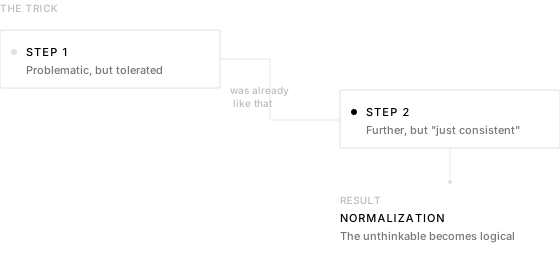
I know this pattern from other contexts. News was already distorted by editorial choices, so fake news does not change much. Politicians already exaggerated their record, so an invented biography is no real departure. The air was already polluted, so a bit more makes no difference. Customer service was already scripted and impersonal, so automating it changes nothing that mattered. Political speeches were already hollow, so it makes no difference whether a language model writes them. Each time, the shift is small enough to still sound logical.
Where the pattern breaks
Applied to influencers, the argument treats staging and generation as the same move at different intensities. They are not.
A human influencer who curates a feed remains a person. She wakes up in the morning. She decides, each day, what to show and what to withhold. The picture she posts is invented, but the choice behind it is hers, made by someone who exists outside the frame.
An AI-generated influencer has no such person behind the account. An algorithm renders a face. It narrates a life nobody has lived and produces emotions nobody feels: computed signals engineered to read as feeling. The gap between staged and generated comes down to whether anyone is there at all.
The stated goal of these projects is that the performance should look real. “Authenticity” is the word their creators reach for, and this is exactly where the error sits: the belief that a fake becomes real once it is staged convincingly enough. Presentation does not close the gap between an invented life and a lived one; it leaves the invention harder to see.
The normalisation at work
“If the real thing was already fake, a fully fake one is just the logical next step” wears the shape of reasoning. What it actually does is announce that the line was crossed a while ago, so crossing it further meets no resistance.
I have sat across from someone making exactly this case. “Come on. It was already like that before.” Yes. It was already like that before. Accepting that first step without question removes the ground needed to reject the second one. Nobody plans this as a trick. It happens structurally, through what people let pass the first time.
The companies that build AI influencers describe them as a business model, an innovation, the next stage. In this logic only one thing counts: whether it works, whether it draws reach, whether the reach converts to money. The money comes from staging a person who never existed, and nothing in that logic registers the difference.
What is actually at stake
The same move works far beyond influencers. Customer service was already scripted and impersonal before software took over the conversation; automating it keeps that impersonality and adds to it. Political speeches were already written for effect rather than conviction before a language model started drafting them; that history supplies the licence for the model’s version. Each of these steps borrows its permission from a problem that came before it, and each use of the borrowed permission licenses the next one.
Follow that chain far enough and nothing left in it is real, though by then someone will insist it always looked this way. What remains open is whether we still believe what we tell ourselves.