“How much automation is acceptable?” comes up constantly in conversations about AI, and few ever answer it. It is the right question. The usual debate gets stuck on whether AI works or how to roll it out. This one asks something else: how much of it anyone actually wants.
A serious answer to that question could push the whole discussion in a different direction. More technology is not automatically better. The right amount might turn out to be less than most people assume.
Instead, the same answer comes back every time: a hybrid model. Human and machine work together, split by task. The machine takes on the routine work; the decisions that matter stay with people. The framing is always the same, getting the balance right.
It sounds reasonable, a compromise almost anyone could sign off on. A hybrid model names a mixture. The question of where the limit sits turns into a question of how to tune the mixture.
I’ve worked on projects where hybrid was always the beginning. The machine starts with the boring tasks, moves on to the repetitive ones, then takes the ones nobody wanted to do anyway. At some point hybrid is just another word for automated, with a human who occasionally presses a button.
The direction is always the same. Automation expands. No organisation adopts a hybrid model and later decides to swap in more people and less machine. Machines cost less than people to run, and once that fact is on the table, the pull only goes one way. Hybrid is a stage in a longer shift toward more automation. Few organisations plan to stay there.
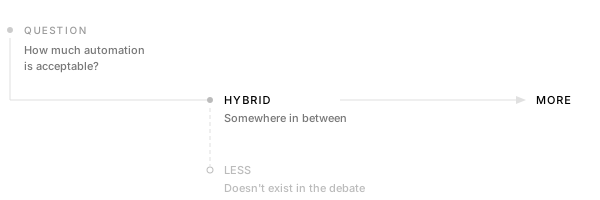
Anyone who has worked with AI knows this, whatever the industry. The idea that the process stops at some point and settles into a sweet spot, where human and machine sit as equals indefinitely, runs against every previous wave of automation.
What bothers me about this answer is that it ignores this contradiction. History repeating itself here is more likely than the logic of automation suddenly ceasing to apply.
Take customer service. AI handles the simple requests; the complex ones still go to a person. Framed this way, hybrid sounds sensible. Then ask what happens once the AI can also handle the complex cases. Does a company keep a person there anyway, purely because it drew the line there, or does it cut the role because the machine is cheaper and works at least as well?
The question answers itself, and that is the problem with the whole framing. Hybrid describes a snapshot, a temporary split at a moment before the machine has caught up. It says nothing about where things should stop once the machine has.
So: how much automation is acceptable? The honest answer is that nobody knows. There is no criterion, no framework, that marks a line and says a person belongs on this side of it as a matter of principle, independent of what the machine can already do.
Until that answer exists, hybrid is the word on offer, standing in for a question nobody has worked out how to answer. On the pattern automation has followed so far, the machine will likely make the question moot first.