In 2010 I started selling silicone bracelets with a hologram inside, at 39.90 a piece. It grew into a European wholesale operation with exclusive licences. We sold online, at sports events and at trade shows. Later the sport and lifestyle retail trade picked the product up too.
The pitch relied on a demonstration. I asked a customer to stretch out an arm, then pushed against it. The arm gave way and the person tipped off balance. Then I put the bracelet on their wrist and pushed again. This time they stood firm. Every single customer was surprised.
Whether the effect actually came from the bracelet, I still don’t know. The studies pointed to placebo, though which study, run by whom, in what year, I could not tell you today. For the customer standing in front of me, the mechanism behind the effect made no difference. The feeling in their arm was real, whatever produced it.
What made it sell
The bracelet itself was cheap silicone with a printed hologram. What we sold was a story built around it: energy, frequency, balance, words borrowed from physics and stripped of their meaning, backed by testimonials from athletes willing to put their name on the effect.
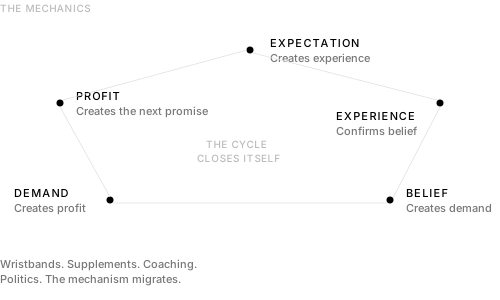
The mechanism repeats across a whole category of products. Expectation sets up the experience, which once felt produces belief, and belief in turn produces demand: more customers standing in front of a salesman, feeling the same arm test. The loop closes on itself and does not need a single lie to keep turning. Power Balance bands became the epitome of an entirely new product segment, built on exactly this cycle.
Hype like that ends. Journalists tested the bands, found nothing beyond the arm trick, and lawsuits followed. The category shrank. The mechanism underneath survived, because it was never tied to one product or one brand.
Beyond bracelets
I had also sold dietary supplements, a business built on the same logic with cleaner legal ground. A supplement can carry a line like “supports your wellbeing” without proving a single measurable effect, and the sentence is not even false. It is vague enough to be safe and confident enough to be persuasive, exactly what marketers build such wording to do.
Coaching runs on the same fuel with even fewer checks in place. Coaches demonstrate success through testimonials and stories, and rarely does anyone go back to verify what actually changed and why. A client who feels better attributes the improvement to the coach, much as a customer with a firmer arm attributed it to the bracelet.
Against all this stands one salesman I still remember as the best I ever watched work. He never pushed. He explained the product patiently, then gave the customer all the time in the world to think it over. He sold plenty, without ever needing the arm trick.
The pull underneath
People want a solution without any ifs or buts. That wish sits deeper than reasoning, and it is strongest in the hard stretches of a life: an injury that will not heal, or a plan that is not working. A bracelet, a capsule or a coaching call for six weeks looks small against that kind of pressure, and small is exactly what makes it easy to buy.
I don’t want to moralise about this, because I was not standing outside the mechanism watching it work on other people. Did I sell belief, wrapped in silicone, fitted with a hologram, suggesting it would solve your problem? Yes, I did.
People let themselves be convinced this easily all the time. That is ordinary, true of a sharp buyer and a careless one alike. How a seller, or a market, responds to that fact matters more. Regulation can draw a line around the worst claims. A market left alone will keep rewarding whoever tells the most convincing story, regardless of what sits inside the packaging.
I learned this by selling it myself, over years. That is why I keep coming back to the question here, essay by essay.