I have always thought of data analysis as somehow the epitome of logic. Numbers go in, a conclusion comes out, and the conclusion is only as good as the numbers and the method behind it. I held that belief for years, until the day I understood what the third stage of analytics actually does.
Data analysis runs in three stages. Descriptive analytics says what happened. Predictive analytics says what is likely to happen next. Prescriptive analytics says what to do about it. The sequence reads like a natural progression, each stage a technical step up from the one before. It is not. The first two stages produce information. The third produces an instruction.
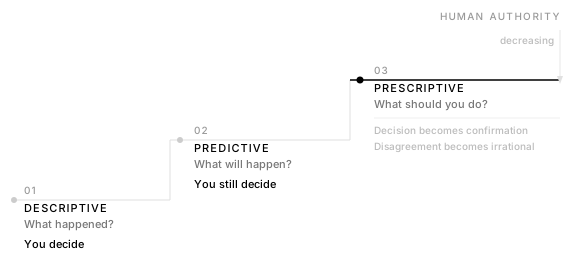
Descriptive and predictive analytics hand a person a picture: a pattern in last quarter’s sales, a forecast for the next one. The person takes that picture, weighs it against experience, argues it out with a team and reaches a conclusion that can diverge from what the numbers alone suggest. That capacity to diverge is what business judgement means. It is the working core of leadership.
Prescriptive analytics hands the person a verdict already reached. A human being still signs the recommendation, so the decision still looks like it belongs to a person. But the recommendation itself comes from a model that weighs more variables than a person could hold in their head and computes in seconds what would take a team days. The model has no ego and no stake in the outcome. When its recommendation turns out right, quarter after quarter, what does the human signature under it actually still mean?
The CFO who stopped asking
I spoke with a chief financial officer who told me exactly that, quite openly. His company runs an optimisation system that produces fresh recommendations on pricing strategy, assortment and workforce planning. He used to check the recommendations against his own read of the market before signing off. He has stopped. The system’s recommendations have come back right, quarter after quarter, precise down to the figures he would once have argued over.
He told me he now tells himself he just needs to sign off on this, and treats the rest as settled before he opens the file. We both laughed about it at first. What he said next has stayed with me since: “I don’t know anymore whether I’m still doing my job or just showing up.” Workers have watched machines take over tasks for two centuries, so an identity crisis born from optimisation is nothing unusual on its own. Here, the task being taken is the one thing his title was supposed to mean: deciding.
The disappearing alternative
A decision requires a genuine alternative. If choosing differently means choosing worse, on numbers you cannot contest, that option stops functioning as an alternative; choosing it anyway means refusing to use the information in front of you. Overriding a recommendation you know to be inferior risks a manager’s own standing, in exchange for the privilege of being wrong on purpose.
Vendors market prescriptive analytics as a tool that helps companies decide faster and better. What the pitch leaves out is what actually happens inside the company that buys the system: the recommendation from the software becomes the decision itself, and the shift from person to programme happens without a vote or an announcement. The CFO’s authority was never revoked. It had nowhere left to be exercised, because every alternative to the model’s answer was, provably, a worse one.
The people whose job was judgement are the ones this reaches first, and for a long time, they assumed that judgement was the one thing software would not touch. Analysts get replaced by better analysts. What replaces an executive whose signature has become a formality is a harder question, and the honest answer is that nobody running these systems has fully worked it out yet. The CFO I spoke with still shows up every morning and still signs the file. He no longer knows whether signing it still makes him the one deciding.