I stood under a roof in a forest in Bali and felt something go quiet in me, though nothing around me was quiet at all. Insects worked through the trees. Water moved somewhere below. My son, who was travelling with me, stood next to me and said nothing. We had come across the roof by accident, dark tiles held up on weathered wood, open on every side, no walls, no sign, no name. We stayed maybe twenty minutes, though it felt closer to an hour.
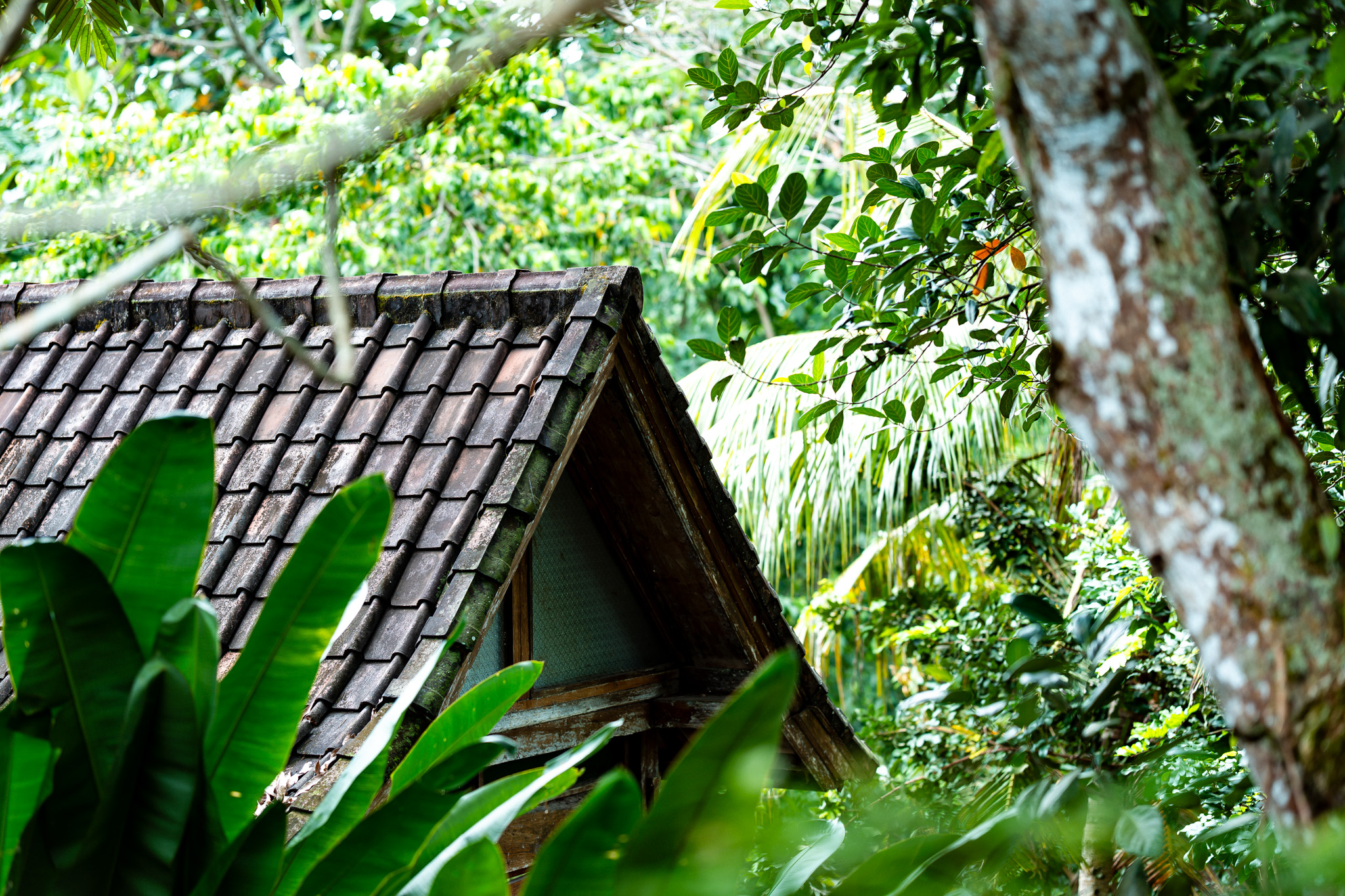
I had felt something like it on an earlier trip to the same place and could not explain it then. This time I brought a camera to work out what the feeling was made of. Taking pictures helps me the way writing does, sometimes more, when the subject is an environment rather than an argument. Under that roof I had no question to answer and no photograph I was trying to get. My son and I looked without asking anything and without searching for anything.
The roof was not a temple. It was not a retreat centre or a yoga platform or any of the other categories a structure like this usually falls into once someone puts a name on it. It had no programme. That absence is what turned the experience over for me. The question shifted from what the place was for to what would happen if a room like this had been built on purpose, for the effect it produced by accident.
What neuroarchitecture measures
I came to the term neuroarchitecture through a photo project, in a professional context rather than an academic one. The field studies how built space affects the body and the mind: light tuned for concentration, acoustics that keep a conversation intelligible, a temperature the body stops noticing. The findings matter. A room can be measured against a task and shown to do that task well or badly.
But the measurement assumes the task. It turns the person into a user and the room into a tool, and every question after that is a question of performance: does the space work, and how well. Under the roof in Bali there was no task to perform against. The room, if I can call it that, was not helping me concentrate or rest or connect. It asked no task of me, and the quiet I felt came from exactly that.
A room that empties instead of performing
Almost no architecture is built for that. Nearly every room installs an agenda before the first person enters it: inform, persuade, sell, entertain, improve, produce. Even spaces built for relaxation have a task: they are meant to relax you, which is still a job the room is expected to do. A room that empties you rather than performing on you is a different proposition. It asks nothing of the person inside it, and the absence itself is the whole effect.
Old churches do something close to this. A visitor does not need to hold the belief the building was raised for to feel the stillness inside one. The effect comes from the proportions, the light, the enclosure, not from the doctrine. The architecture produces the state independently of the programme it was built to serve.
Yet no existing room type is built for a person who wants only to be present, without a programme attached. Churches are built for believers, museums to stage objects, meditation centres for a practice with instructions and often a teacher. Each of these rooms does produce something like stillness, but only as a side effect of serving a different purpose first.
Nature comes closer to a space with no task. It asks nothing of a visitor. But nature offers no shelter and no visible threshold. A building’s threshold marks a crossing, the door or the step that says the rules on this side differ from the rules outside. Nature rarely offers that kind of marker, except at the limits nobody can cross anyway, a cliff edge, a ridge, an ocean.
The threshold question
What would a threshold like that need to say? Something closer to: leave here what you carry. The roles you hold, the noise in your head, the expectations you arrived with, the open questions and the doubts. A room built for nothing does not need a doctrine to say this. It has no religion of its own, no right or wrong. It offers only presence for a person’s own presence, met on equal terms rather than instructed from above.
This is not the same as relaxation. Relaxation is the absence of stress. Silence, in the sense I mean here, is something else: the state in which a person meets themselves without the story they usually tell about who they are, and without the roles that story assigns them. The story falls away entirely, not fading by degrees.
Most people only find that state by accident, on an empty beach at dawn, in a mountain hut after a long climb or on a trip far enough that nobody knows them and nobody wants anything from them. Mine was a roof in a forest on Bali.
What is left open
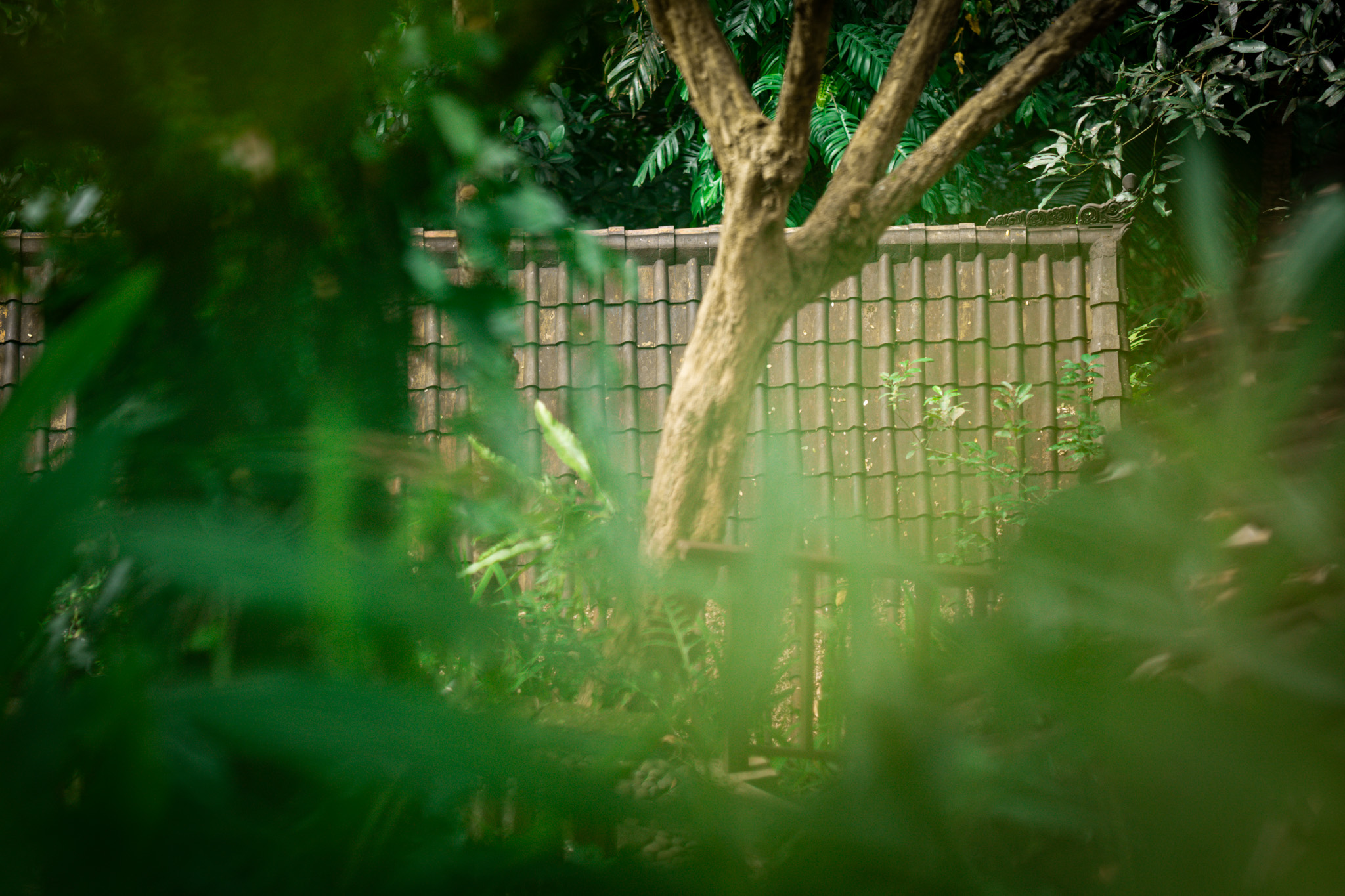
The question that stays with me is what a person actually sees once nothing is asked of them, more than what was hidden under that roof, and whether architecture can leave room for what nobody planned rather than closing it off. Whether a room that asks nothing of a visitor can still stay open to whatever arises, for the person who needs a pause from everything that otherwise defines them, without being built for a god, an artwork or a therapy session first.
This is not a project in any usual sense. There is no business plan behind it and no site. It is a possibility that exists because the need for it exists, whether or not a building ever answers it. I do not know if one will. But since Bali the question has not left me: if an accidental roof in a forest can do this, what would a room built for exactly that purpose do, one where a person does nothing and a new thought is free to arrive on its own, before it turns into a task.